Views: 0 Author: Site Editor Publish Time: 2026-02-04 Origin: Site


Main Terms for Laser Diode
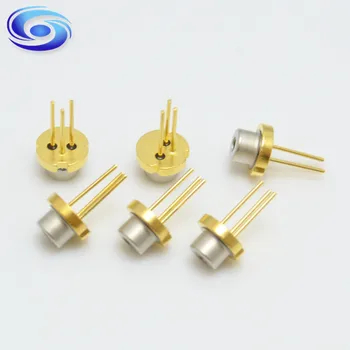
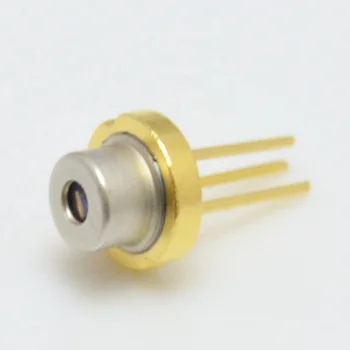
Laser diodes (LDs) are widely used in various fields such as optical communication, industrial processing, medical treatment, and sensing, and mastering their core terms is crucial for technical communication, product selection, and performance evaluation. These terms cover the most frequently used concepts in technical documents, product specifications, and marketing copy.

| Term | Symbol | Explanation |
| Laser Oscillation | - | This refers to the generation of intense coherent light (laser light) by supplying energy to the medium and reflecting/amplifying light in a resonator. |
| Visible Light | - | Wavelengths between 380 and 780 nm what is the range of electromagnetic waves that are visible to the human eye. In order of increasing wavelength, these are called violet, indigo, blue, green, yellow, orange, and red. |
| Spectrum | - | The intensity distribution of electromagnetic waves by wavelength obtained through a spectrometer. The spectrum varies depending on the compound semiconductor material and the design of the active layer. |
| Coherency | - | This refers to a property of light, indicating the degree of interference between light waves (the alignment of their phases). Laser light is a prime example of coherent light. |
| Beam Mode | - | This refers to the shape and spectral distribution of the light emitted from an LD. There are single transverse modes and multiple transverse modes. |
| Single Transverse Mode (Single Mode) | - | Mode where the laser beam shape is elliptical, and the spectrum is concentrated at the center. Beam quality is good, but the output is low. |
| Multiple Transverse Modes (Multi Mode) | - | Mode where the beam shape is elliptical or consists of multiple circular shapes, with multiple spectral peaks. |
| Absolute Maximum Ratings | - | The limit that must never be exceeded when driving the LD. Even a momentary exceedance can cause damage to the LD or lead to a significant decrease in performance. |
| Optical Output | - | The amount of light emitted from the LD. Depending on the output method, it is divided into CW (Continuous Wave) optical output and pulsed optical output. |
| WPE (Wall-plug Efficiency) | - | This is a indicated of power conversion efficiency. This refers to an indicator that represents the emission efficiency of the LD. The unit is expressed as a percentage (%). |
| Ambient Temperature | Ta | This refers to the ambient air temperature around the LD. Prolonged exposure to high temperatures can affect the LD, so it is important to keep the ambient temperature low. |
| Case Temperature | Tc | The temperature of the CAN stem or frame. The measurement location is specified in the specification sheet. The temperature when the LD is powered on (operating temperature) is also synonymous. |
| Junction Temperature | Tj | The temperature of the laser chip, which is the heat source. It is important to control the ambient temperature and case temperature to keep the junction temperature low. |
| Thermal Resistance | Rth | This is an indicator used to evaluate heat dissipation performance, representing the difficulty of heat transfer. It is used in expressions like "the thermal resistance between ambient temperature and case temperature is high." |
| Threshold Current | Ith | This refers to the minimum current required for the LD to emit light. When the threshold current is exceeded, the optical output increases rapidly. |
| Operating Current | Iop | This refers to the forward current required for the LD to operate normally. It is often used in the "I-L graph," which shows the correlation between current and optical output. |
| Operating Voltage | Vop | This is the forward voltage required for a semiconductor LD to operate normally. It is often used in "IV graphs" to show the correlation with the operating current. |
| Forward Current | If | This refers to the forward voltage required for the LD to operate normally. It is often used in the "I-V graph," which shows the correlation between operating current and voltage. |
| Forward Voltage | Vf | This refers to the voltage applied in accordance with the polarity of the LD. |
| Peak Emission Wavelength | λp | This refers to the wavelength at which the LD exhibits the highest emission intensity during laser oscillation. |
| Beam Divergence Angle | θ//, θ⊥ | This refers to the angle of the light emitted from the LD at half of the peak intensity. θ// represents the horizontal direction. θ⊥ represents the vertical direction. |
| Synchrotron Radiation Axis Offset Position | ⊿x, ⊿y, ⊿z | This refers to the displacement of the laser chip position in the x, y, and z directions. ⊿x and ⊿y represent the displacement from the center of the package, while ⊿z represents the displacement from the reference plane. |
| Synchrotron Radiation Axis Deviation Angle | ⊿θ//, ⊿θ⊥ | This refers to the misalignment of the optical axis relative to the reference plane. ⊿θ// represents the horizontal direction, and ⊿θ⊥ represents the vertical direction. |
| Slope Efficiency | ηd | This refers to the average increase in optical output per unit of drive current in the laser oscillation region. It corresponds to the slope in the "I-L graph." |
| Kink Rate | K-LI | This refers to the change in slope when the correlation between operating current and optical output bends at some point. Our company defines it within a range that has only a few impact on optical design in the specification sheet. |
| Interference Pattern Intensity Ratio | α | This is a parameter that represents the coherency of the laser light. It is expressed by the attenuation rate of the clarity of interference fringes when formed. |
BU-LASER offers semiconductor laser diodes from 375nm to 980nm from different brands and with different package, please contact us for any model you want ( email: song@bu-laser.com)!