

Views: 0 Author: Site Editor Publish Time: 2025-11-17 Origin: Site


Have you ever wondered what makes laser devices different? A diode laser is a tiny semiconductor that produces laser light. A laser module combines this diode with optics and electronics for practical use. In this post, you’ll learn the key differences and applications of diode lasers and laser modules.
A diode laser is a semiconductor device that generates laser light by converting electrical energy directly into light. At its core lies a p-n junction where electrons and holes recombine. When voltage drives current through this junction, electrons drop from a higher energy level to a lower one, releasing photons—particles of light. Initially, spontaneous emission produces photons randomly, but as the process continues, stimulated emission occurs, amplifying light with the same phase and wavelength, creating a coherent laser beam.
The diode laser's structure typically includes an active layer sandwiched between semiconductor materials forming the p-type and n-type regions. This active layer is where the light generation happens. Two reflective surfaces at the ends of the diode form a resonant cavity, allowing light to bounce back and forth, increasing intensity until it emits as a laser beam.
Various diode laser designs exist, each improving performance:
Single Heterojunction (SH) lasers: Feature one junction between different semiconductor materials, helping confine carriers and light but with moderate efficiency.
Double Heterojunction (DH) lasers: Include two junctions sandwiching the active region, enhancing carrier and optical confinement, leading to higher efficiency and lower threshold current.
Quantum Well (QW) lasers: Use ultra-thin layers forming "wells" that trap carriers in two dimensions, producing better performance, narrower emission spectra, and lower power consumption.
The operation begins when a forward voltage causes electrons to inject from the n-type side into the p-type side, where they recombine with holes. This recombination emits photons. When enough carriers accumulate, stimulated emission dominates, creating a coherent light beam. The resonant cavity formed by two mirrors reflects photons, amplifying light intensity. Once the optical gain surpasses losses, the laser emits a stable, monochromatic beam.
Diode lasers come in several packaging styles to protect the delicate semiconductor and facilitate integration:
To package: A basic form where the laser chip is mounted on a heat sink with electrical contacts, often used for lab or custom applications.
Butterfly package: A more robust housing offering better thermal management and multiple electrical connections, ideal for telecommunications.
14-pin packages: Standardized modules allowing easy connection and control, common in industrial and commercial devices.
Packaging not only shields the laser diode but also aids in heat dissipation, electrical connection, and mechanical mounting. Effective packaging extends device life and ensures stable operation. When selecting a diode laser, consider the type (SH, DH, or QW) based on required efficiency and beam quality for your application.
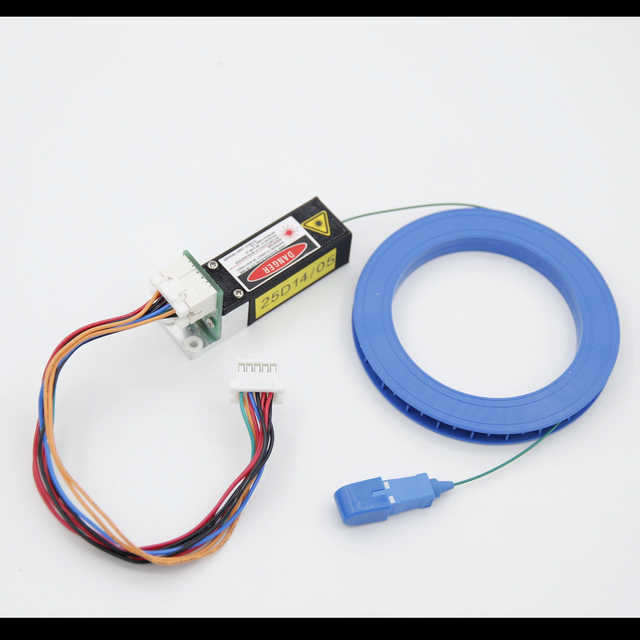
A laser module is a complete device designed to emit a laser beam ready for practical use. It contains several key components beyond the laser diode itself. The core is the laser diode, the source of laser light. Surrounding it are optics such as lenses or diffractive optical elements (DOE) that shape or focus the beam. Cooling devices like heat sinks or fans manage heat to keep the diode stable. Electrical parts, including driver circuits, provide constant current or voltage to protect the diode and maintain steady output. The module's housing offers mechanical protection and makes installation easier.
Optics in a laser module control the laser beam’s direction, size, and shape. For example, a glass lens can focus the beam into a tight spot or expand it for a wider area. DOEs can create patterns or adjust beam profiles for specific applications. Cooling devices prevent overheating, which can reduce performance or damage the diode. Efficient thermal management extends the module’s life and keeps output power stable. Drivers regulate electrical input, supplying the diode with a steady current or voltage. They also include safety features to avoid sudden surges or drops that could harm the diode.
The laser diode is carefully mounted inside the module’s housing, often on a heat sink to aid cooling. The optics are aligned precisely in front of the diode’s emission facet to shape the beam as needed. Electrical connections link the diode to the driver circuit, which controls power delivery. The entire assembly is enclosed in a durable case, usually made of metal like aluminum, copper, or stainless steel. This integration transforms the bare diode—essentially a tiny semiconductor chip—into a robust, user-friendly device that can be easily installed and operated in various systems.
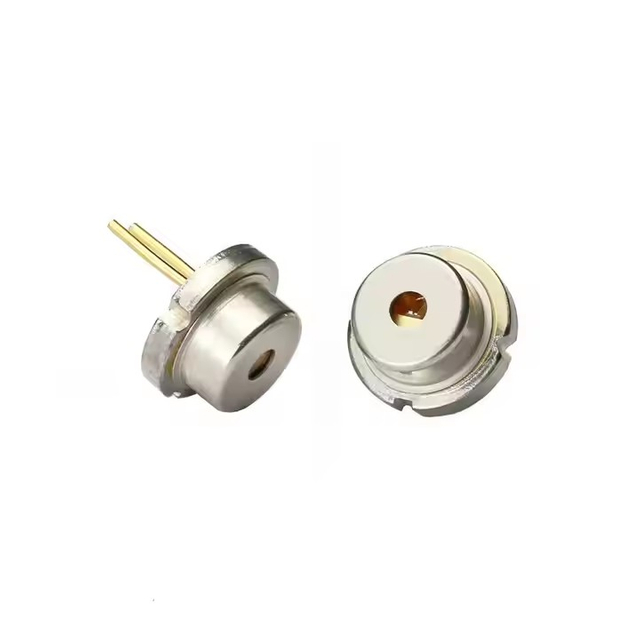
Compared to standalone diode lasers, laser modules look like compact, sealed units rather than small electronic components. A diode laser might come in a simple “TO” package or butterfly housing, often requiring external optics and cooling. The laser module, however, is a ready-to-use product with integrated optics, cooling, and electronics inside a rugged casing. Modules typically have connectors or wires for power and control, making them plug-and-play. Their size varies depending on power and features but generally is larger than the bare diode due to added components.
A diode laser primarily generates laser light. It converts electrical energy into coherent light inside its semiconductor junction. However, it usually doesn't emit a usable laser beam by itself because it lacks the necessary components to shape, control, or protect the beam.
A laser module, on the other hand, emits a ready-to-use laser beam. It integrates the diode laser with optics, cooling, and driving electronics. These additions ensure the laser beam is stable, focused, and safe for practical applications. So, while the diode laser creates the laser light, the laser module delivers it effectively.
Structurally, a diode laser is a single semiconductor component. It often comes packaged simply, such as in a TO-can or butterfly package, mainly to protect the chip and aid heat dissipation. It's delicate, requiring careful handling and external parts to function fully.
A laser module is a complete device. It houses the diode laser inside a protective casing along with lenses, cooling elements, and driver circuits. This full assembly provides mechanical strength, thermal management, and electrical stability. The module looks like a compact unit with connectors for easy integration.
The diode laser is the core of the laser module. Without it, the module cannot produce laser light. The module’s other parts support and enhance the diode laser’s performance. For example, optics focus the beam, cooling prevents overheating, and drivers control power supply, protecting the diode from damage.
Thus, the diode laser acts as the heart, generating the beam, while the module’s additional components serve as the body, enabling the beam’s practical use.
Laser modules offer several benefits compared to using diode lasers alone:
Ease of use: Modules come ready to operate, requiring no extra optics or cooling setup.
Improved durability: The casing protects sensitive parts from dust, moisture, and mechanical shocks.
Better thermal management: Integrated heat sinks or fans maintain stable temperatures, extending diode life.
Stable output: Driver circuits ensure consistent current, preventing fluctuations that reduce beam quality.
Simplified installation: Connectors and mounting options make modules plug-and-play in various systems.
In contrast, standalone diode lasers need additional components and careful assembly to achieve similar performance and reliability. When designing a laser system, consider using a laser module to simplify integration and improve reliability, especially in demanding environments.
Diode lasers serve as the core light sources in many optical communication systems. They convert electrical signals into laser light, enabling high-speed data transmission through fiber optics. Their compact size and efficiency make them ideal for telecom networks, data centers, and internet infrastructure.
In industrial processing, diode lasers provide precise, high-energy beams for cutting, welding, and marking materials. Their fast modulation and reliability allow for automation in manufacturing lines, improving productivity and quality. For example, diode lasers are used in semiconductor wafer processing and medical device fabrication.
Laser modules integrate diode lasers with optics and drivers, making them perfect for positioning and scanning tasks. They emit stable, focused beams that help machines locate targets accurately. Applications include barcode scanners, laser printers, and 3D scanning systems.
Modules also enable laser projection in alignment tools and surveying equipment. Their built-in cooling and drivers ensure consistent output, critical for precision tasks. For instance, laser modules guide robotic arms in assembly lines or assist in medical imaging.
Diode lasers mainly fit applications needing a light source only, where system designers add optics and controls. This suits custom setups or environments requiring compact, bare components.
Laser modules suit turnkey solutions needing ready-to-use, stable lasers. They simplify integration, reduce setup time, and improve reliability in harsh or variable conditions. Modules are favored in commercial products and field equipment.
Telecommunications: Diode lasers power optical transmitters; laser modules help in fiber optic test equipment.
Manufacturing: Diode lasers cut microelectronics; modules assist in automated quality control.
Healthcare: Diode lasers enable surgical lasers; modules support diagnostic devices.
Consumer electronics: Modules appear in barcode scanners and laser pointers.
Research: Diode lasers offer customizable sources; modules provide stable beams for experiments.
Each technology plays a vital role, chosen based on complexity, environment, and performance needs. For applications requiring quick deployment and stable output, choose laser modules; for custom or highly integrated systems, diode lasers offer flexible light sources.
Diode lasers usually deliver laser light at the chip level, and their output power can range from a few milliwatts to several watts depending on design. However, the beam quality from a bare diode laser tends to be less uniform and more divergent because it lacks beam-shaping optics. The emitted beam often has an elliptical shape and higher divergence angles, making it harder to focus precisely.
Laser modules, on the other hand, incorporate optics such as lenses or diffractive elements that improve beam quality. These optics can collimate the beam, reduce divergence, and create a circular or customized beam profile. As a result, modules provide more stable and higher-quality laser beams suitable for tasks requiring precision. Output power in modules is also more consistent, thanks to integrated drivers that regulate current supply.
Diode lasers generate heat during operation, which affects wavelength stability, output power, and device lifetime. Without proper cooling, the diode can overheat, leading to performance degradation or failure. Bare diode lasers often require external heat sinks or thermoelectric coolers to maintain stable temperatures.
Laser modules include built-in thermal management solutions such as heat sinks, fans, or thermoelectric coolers. These cooling devices help maintain a constant temperature, improving performance stability and extending the module’s operational life. The integrated cooling also simplifies system design, reducing the need for additional thermal components.
Diode lasers are delicate semiconductor components packaged in small housings. They need careful handling and precise mounting to avoid damage. Installation usually involves aligning external optics and ensuring proper heat dissipation, which increases complexity.
Laser modules come in rugged enclosures made from metals like aluminum or copper, providing mechanical protection against shocks, dust, and moisture. Their compact, self-contained design makes installation straightforward. Modules often have mounting holes and standard connectors, enabling quick integration into devices or systems without specialized tools.
Operating a diode laser requires a stable current source to prevent damage from current spikes. Bare diodes need external driver circuits that provide constant current and protect against voltage fluctuations. Without proper drive electronics, the diode’s lifespan and performance suffer.
Laser modules include integrated drivers that supply regulated current and voltage. These drivers often feature protection functions like overcurrent, overvoltage, and temperature shutoff. Such built-in safeguards ensure safe operation, reduce the risk of premature failure, and simplify power supply design for users.
Tip: When selecting a laser solution, choose laser modules for applications needing stable output, easy installation, and built-in protection, especially in demanding environments.
Choosing between a diode laser and a laser module depends heavily on your specific application requirements. If you need a simple light source for integration into a custom optical system, a diode laser might be the best choice. It offers flexibility for system designers who want to add their own optics, cooling, and electronics.
However, if your application demands a ready-to-use laser beam with stable output, consistent power, and easy installation, a laser module is preferable. Modules come with integrated optics, cooling, and drivers that ensure performance stability. They simplify system design and reduce development time.
Consider the beam quality needed. Diode lasers often emit divergent, elliptical beams requiring external optics. Laser modules provide collimated or shaped beams, ready for direct use. Also, think about the environment: modules offer better protection against dust, moisture, and mechanical shock.
Diode lasers generally cost less upfront since they are just the semiconductor chip in a simple package. However, total system cost can increase due to the need for additional components like lenses, cooling systems, and driver electronics.
Laser modules cost more initially because they include these components integrated into one device. Yet, they reduce complexity and labor during assembly, testing, and maintenance. For many businesses, the time saved and improved reliability justify the higher module price.
If your project has tight budget constraints but skilled engineers for custom integration, diode lasers might be the economical choice. For quicker time-to-market and lower integration risk, laser modules are often more cost-effective overall.
Harsh environments with temperature fluctuations, dust, or vibration favor laser modules. Their rugged housings and built-in cooling protect the diode and maintain stable operation. Modules also often include driver protections against electrical surges and thermal shutdown.
Diode lasers require careful handling and external thermal management. They suit controlled lab settings or embedded systems with dedicated cooling and electronics.
If your application involves field deployment, outdoor use, or industrial settings, laser modules provide better durability and reliability.
| Scenario | Recommended Choice | Reason |
|---|---|---|
| Custom optical systems needing flexibility | Diode Laser | Allows tailored optics and electronics integration |
| Quick deployment with minimal setup | Laser Module | Plug-and-play, stable output, easy installation |
| Harsh or variable environmental conditions | Laser Module | Robust housing, integrated cooling and protection |
| Tight budget with skilled integration team | Diode Laser | Lower initial cost, requires external components |
| High precision beam shaping required | Laser Module | Includes optics for beam quality and stability |
Diode lasers generate laser light, while laser modules deliver ready-to-use beams with integrated optics and cooling. Quality diode lasers are crucial for module performance and reliability. Advances in diode and module technology continue to improve efficiency and beam quality. Selecting the right component depends on your application's needs for flexibility, ease of use, and environment. BU-LASER offers high-quality diode lasers and modules that ensure stable output and durability, providing excellent value for diverse applications.
A: A diode laser is a semiconductor device that converts electrical energy into coherent laser light via electron-hole recombination in a p-n junction, producing a focused beam through stimulated emission.
A: A diode laser is the core light source, while a laser module integrates the diode laser with optics, cooling, and drivers, providing a ready-to-use, stable laser beam.
A: Laser modules offer easier installation, better thermal management, stable output, and protection, making them more reliable for practical applications than bare diode lasers.
A: Diode lasers need external cooling and drivers to prevent overheating and current spikes; laser modules include these features integrated, reducing troubleshooting and enhancing durability.
A: Diode lasers generally cost less initially but require additional components, while laser modules have a higher upfront price but save on integration and maintenance costs.


