

Views: 0 Author: Site Editor Publish Time: 2025-12-20 Origin: Site


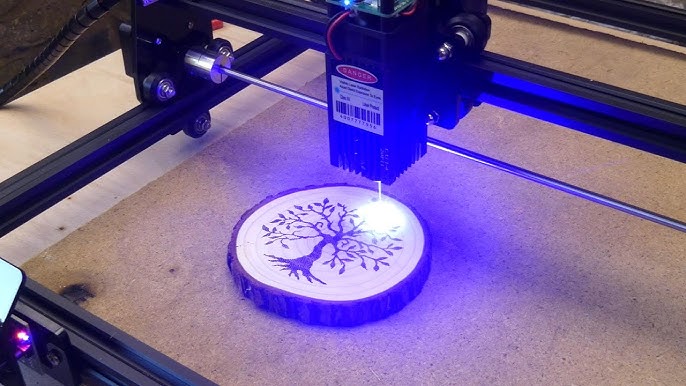
Diode laser engravers are a type of solid-state lasers that use semiconductor diode laser as the source of generating a focused beam of light for cutting, engraving, or marking materials. Diode laser engravers are considered the most accessible and budget-friendly entry point into the world of laser technology.
Material Compatibility
The wavelength of the emitted light is 435-455nm. This wavelength makes diode laser excel in working with organic materials and some synthetics:
Engraving: Wood,Plywood,MDF,Bamboo,Leather,Paper,Some dark and opaque acrylic,Rubber,Silicone,Glass (with coating),Stone,Ceramics (with coating),Plated/coated metal,Stainless steel,Fabric,Cork.
Cutting: Wood,Plywood,MDF,Bamboo,Leather,Paper,Some dark and opaque acrylic,Felt,Cork.
However, blue diode laser struggle with uncoated metals, glass, ceramics, and transparent materials due to wavelength absorption limitations.
Pros:
Budget friendly for beginners and hobbyists
Compatibility with a wide range of materials
Cons:
Can not directly engrave on transparent materials, like glass and clear acrylic.
Limited engraving deepth compared to fiber and CO2 lasers.

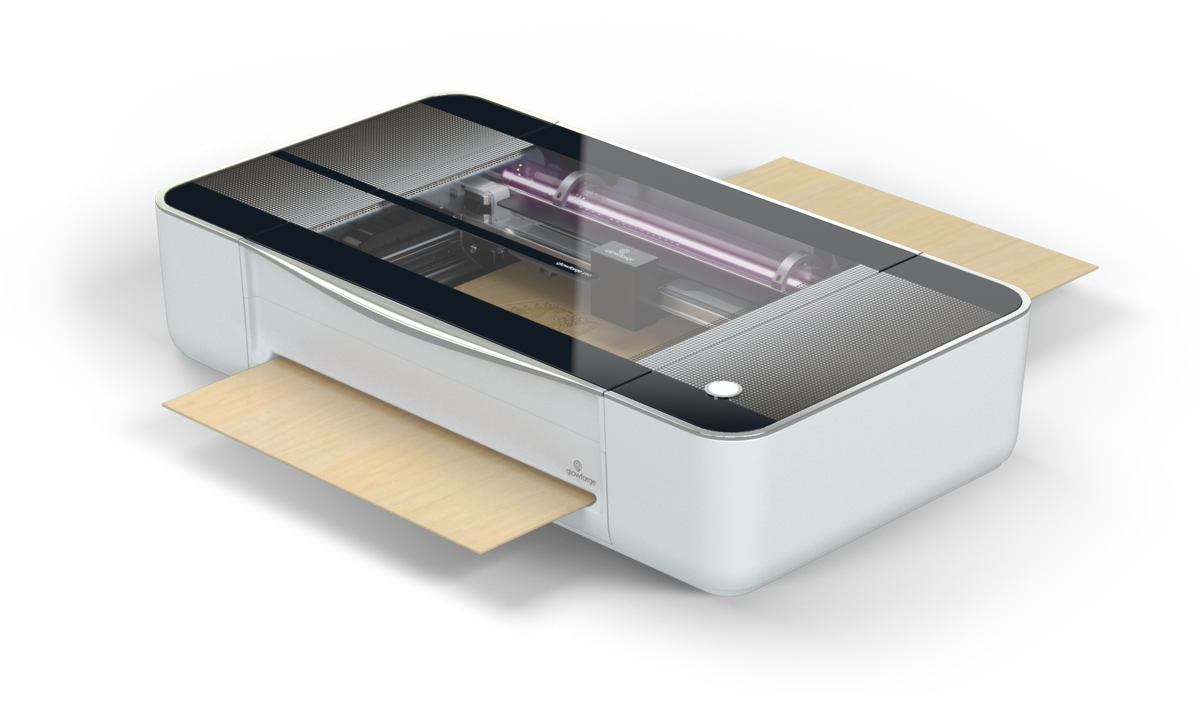
CO2 laser are a type of gas laser that use a mixture of gas to generate the laser beam. The gas is sealed inside a tube, with CO2 taking up the highest proportion, hence the name.
Material Compatibility
CO2 lasers emit light typically at a wavelength of 10.6 micrometers. This wavelength is highly effective for interacting with organic and non-metallic materials, making CO2 laser cutters a staple in industries ranging from manufacturing to arts and crafts.
Engraving: Acrylic,Wood,Plywood,MDF,Bamboo,Leather,Paper,Rubber,Silicone,Glass,Stone,Ceramics,Plated/coated metal,Fabric,Cork
Cutting: Acrylic,Wood,Plywood,MDF,Bamboo,Paper,Rubber,Fabric,Foam, Cork
Like diode lasers, CO2 lasers can not engrave on uncoated metal. However, specialized coatings allow for limited metal marking.
Pros:
Broad material compatibility (non-metals)
Provide cleaner cuts compared to diode lasers
Cons:
Higher upfront cost
Limited metal compatibility
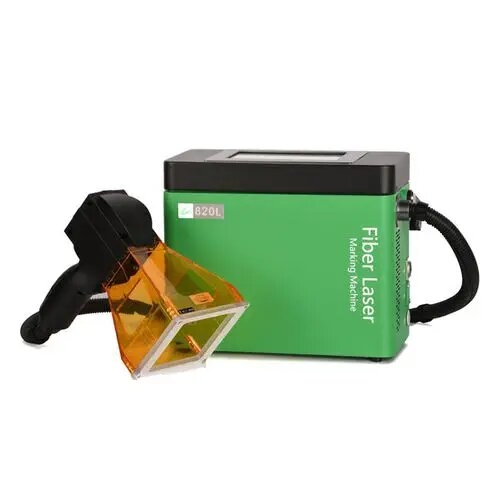
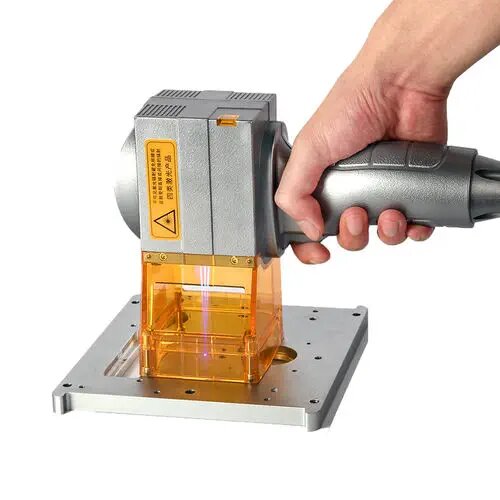
A fiber laser is a solid-state laser that uses a fiber optic cable doped with rare-earth elements (e.g., erbium or ytterbium) to generate an intense, focused beam. Fiber laser engravers are mainly known for their performance and speed with metal engraving and cutting. Their potent power can achieve prominent engraving depth on any metal with ease.
Material Compatibility
Fiber laser excels in metal engraving but perform poorly on organic materials. Key compatible substrates include:
Engraving:
Metals: Stainless steel, aluminum, titanium, brass, copper, gold, silver, and platinum
Plastics: Engineering plastics like ABS and PVC
Some opaque acrylic,Stone,Ceramic,Leather,Rubber,Silicone
Cutting:
Metals: Stainless steel, aluminum, titanium, brass, copper, gold, silver, and platinum
Fiber lasers are not suitable for wood, glass and clear acrylic.
Pros:
Unmatched speed and energy on metals
Capable of deep marks
Cons:
Higher upfront cost
Limited versatility with non-metals
Understanding the differences between fiber, CO2, and diode lasers is critical for choosing the right tool for your projects. Below is a comparison table followed by detailed breakdowns of key factors.
| Feature | Diode Laser | CO2 Laser | Fiber Laser |
|---|---|---|---|
| Technology | Semiconductor diodes | Gas (CO2 mixture) | Solid-state (fiber-doped) |
| Key Materials | wood, leather, opaque acrylic | Wood, acrylic, plastics, glass, fabric | Metals, plastics |
| Power Range | 5~120W | 40~150W | 20~100+W |
| Speed | Moderate | Fast | Very Fast |
| Cost | Cheapest | Medium | Most Expensive |
| Best For | Hobby, beginner projects | Crafts, small business, versatile use | Metal work, small business |
Material compatibility is a critical consideration when selecting a laser. The type of laser fundamentally dictates the range of materials that can be processed.
Diode lasers are primarily effective with organic materials such as wood, leather, paper, and some opaque acrylic. However, diode lasers are generally unsuitable for processing metals, glass, or transparent materials.
CO2 lasers offer broader material compatibility with non-metals compared to diode lasers. They can process materials compatible with diode lasers and extend capabilities to a wider array of materials, such as glass, acrylic(including transparent varieties), and ceramic.
Fiber lasers are specialized for metallic materials. They also show efficacy on many plastics. However, fiber lasers are generally less suited for wood, leather, or other organic materials, where CO2 or diode lasers offer superior performance.
In summary: For applications mainly involving wood and leather, diode lasers are appropriate. If you want more materials in terms of non-metals, choose a CO2 laser. If you're focused on metals and plastics, fiber laser is the way to go.
More power usually means faster work and the ability to cut thicker materials.
Diode lasers have the lowest power compared to CO2 and Fiber lasers. They are good for engraving surfaces and cutting thinner materials. More passes are required to cut thicker materials.
CO2 lasers have more power than diode lasers. Their power ranges from 40W to 150W. They can cut thicker materials and complete the job more quickly. They offer a good balance of power and speed, making them suitable for faster production runs.
Fiber lasers are high-power machines. They can mark metals deeply and quickly, and cut metals with impressive speed and efficiency. They are built for speed and heavy-duty work.
In summary: For applications that necessitate rapid cutting of thicker materials or deep, high-speed engraving of metals, fiber lasers are the optimal choice. CO2 lasers provide a balanced capability for both cutting and engraving across a diverse range of materials. Diode lasers are suitable for processing thinner materials at lower speeds.
The cost of lasers varies substantially based on the laser type and features.
Diode lasers offer the lowest initial cost, suitable for budget-constrained applications or introductory use. CO2 lasers provide a mid-level cost point with increased power and versatility. Fiber lasers represent the highest cost tier, appropriate for applications demanding top performance and speed, especially in metal processing.
So, you've seen the differences. Now, the big question: which laser is the best fit for you? Let's break it down by looking at when each type really shines.
Consider a diode laser if you:
Are on budget
Are a hobbyist or beginner
Primarily work with wood, leather, or dark acrylic
Are ok with slower speed and thinner cutting
Consider a CO2 laser if you:
Need to work with a variety of materials
Run a small business
Work with clear acrylic
Need faster engraving and cutting speeds
Want to cut thicker materials
Consider a Fiber laser if you:
Primarily work with metals
Need to engrave or mark metals deeply
Require high-speed marking and engraving
Have a larger budget
BU-LASER provides diode laser modules and Fiber Coupled laser module with multiple specification choices(375nm- 980nm, 1mW-500W output power, different fibers, and dimensions) to better meet customers’ needs of laser engraver/ laser cutter/ 3D printer. To know more, please get in touch with us at song@bu-laser.com.


