


Laser modules are compact devices that package one or more laser diodes along with essential components like optics, electronics, and sometimes cooling systems. These modules simplify using laser diodes by providing a ready-to-use solution with enhanced performance and protection features.
At their core, laser modules contain a laser diode, which is the source of coherent light. Around this diode, the module includes:
Optics: Lenses or prisms to shape, collimate, or focus the laser beam.
Electronics: Circuits for driving the diode, stabilizing power, and sometimes modulating the beam.
Cooling Elements: Heat sinks or thermoelectric coolers to maintain optimal temperature.
Housing: A protective casing that often provides electromagnetic shielding and mechanical stability.
This integration makes laser modules easier to handle than standalone diodes. They come with electrical connections, often just two wires, allowing quick setup by simply connecting power.
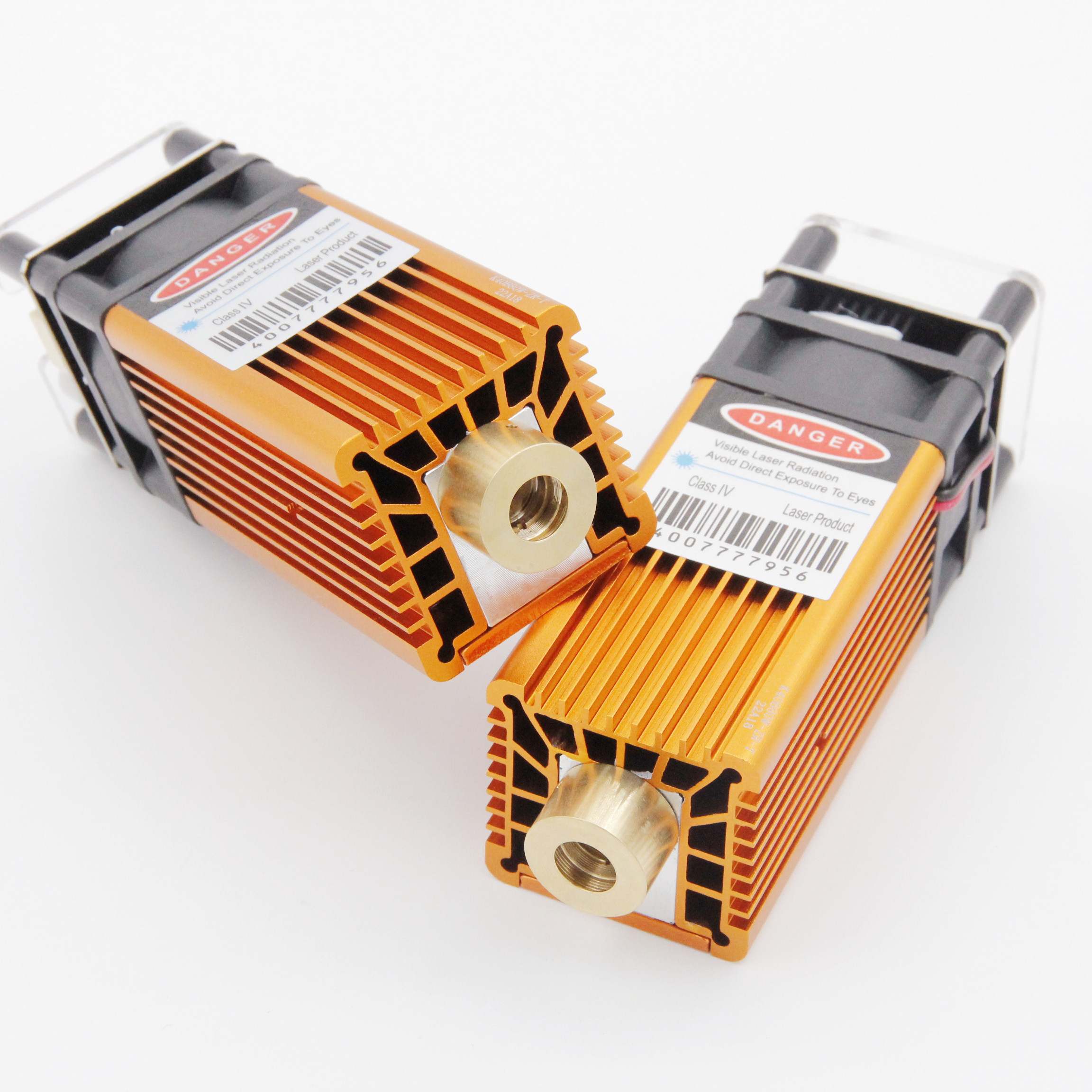
Standalone laser diodes are just the bare semiconductor chips. While they are the fundamental light sources, they require external components to operate safely and effectively:
Driver Circuits: To maintain constant current and prevent damage.
Optical Elements: To shape or collimate the beam.
Thermal Management: To avoid overheating.
Using standalone diodes demands more technical knowledge and careful assembly. Laser modules, by contrast, offer a plug-and-play experience, reducing risks such as electrostatic discharge, incorrect current supply, or misalignment.
| Feature | Laser Module | Standalone Laser Diode |
|---|---|---|
| Ease of Use | High (integrated components) | Low (requires external setup) |
| Protection | Built-in (ESD, overcurrent) | None (user must add protection) |
| Beam Quality Control | Integrated optics for shaping | Needs external optics |
| Thermal Management | Included cooling solutions | User must provide |
| Application Readiness | Ready for immediate use | Requires assembly and testing |
Laser modules often include features like power stabilization and wavelength control, which are challenging to implement with standalone diodes.
Laser modules offer several key features that make them versatile and efficient for many applications. Two of the most important are beam shaping and collimation, plus fiber coupling and output options.
Laser diodes emit light that naturally diverges and often has an elliptical shape. To make the beam useful, laser modules include optics to shape and collimate the light. Collimation means aligning the light rays to be parallel, producing a beam that stays narrow over a longer distance. This is essential for applications like targeting, measurement, or communication.
Common optical components inside the module are:
Collimating lenses: These lenses gather the diverging light and create a narrow, focused beam.
Anamorphic prism pairs: They correct the elliptical shape of the beam, making it more circular.
Micro-optics: Tiny lenses or prisms that fine-tune the beam shape.
Some laser modules offer special beam shapes such as lines, crosses, or squares. These shapes are useful in machine vision, alignment, or scanning tasks.
Key parameters to consider include:
Beam radius: The size of the beam spot.
Beam divergence angle: How much the beam spreads out.
Beam quality factor (M²): Indicates how close the beam is to an ideal Gaussian beam.
Pointing stability: How steady the beam direction remains over time.
Good beam shaping improves performance and efficiency, making laser modules suitable for precise and demanding tasks.
Another important feature is fiber coupling. Some laser modules directly couple the laser light into an optical fiber. This allows easy integration into fiber optic systems and provides flexible delivery of the laser beam.
Fiber coupling types include:
Single-mode fibers: For low power, high coherence applications requiring very narrow beams.
Polarization-maintaining fibers: Keep the beam’s polarization stable, useful in sensing and communication.
Multimode fibers: For higher power levels with less strict beam quality requirements.
Fiber-coupled modules often have "pig-tailed" fibers permanently attached or connectors for easy installation.
Output options vary:
Free-space output: The beam exits into open air, often collimated.
Fiber output: The beam is delivered through a fiber, allowing flexible routing.
Special beam shapes: Outputs like lines or patterns for specific applications.
These features make laser modules adaptable to a wide range of systems, from industrial machines to medical devices.
Laser modules often include advanced features for power and wavelength stabilization plus options for power modulation and pulse generation. These capabilities enhance performance, reliability, and adaptability across many applications.
Maintaining a stable output power is crucial for consistent laser performance. Many modules use an internal feedback loop with a monitor photodiode that senses the emitted light intensity. This feedback adjusts the drive current to keep power steady despite temperature changes or aging. Such stabilization reduces relative intensity noise, which is essential for sensitive measurements or communications.
Wavelength stabilization is equally important, especially in applications like spectroscopy or fiber-optic communication where precise wavelengths matter. Modules achieve this by controlling temperature through thermoelectric coolers (TEC) or by using optical feedback mechanisms.
Laser modules may support power modulation, allowing users to vary output power dynamically. This feature suits applications like optical communication, where data is encoded by changing laser intensity.
Pulse generation is another key function. Certain modules produce nanosecond or even picosecond pulses using integrated gain-switching electronics.
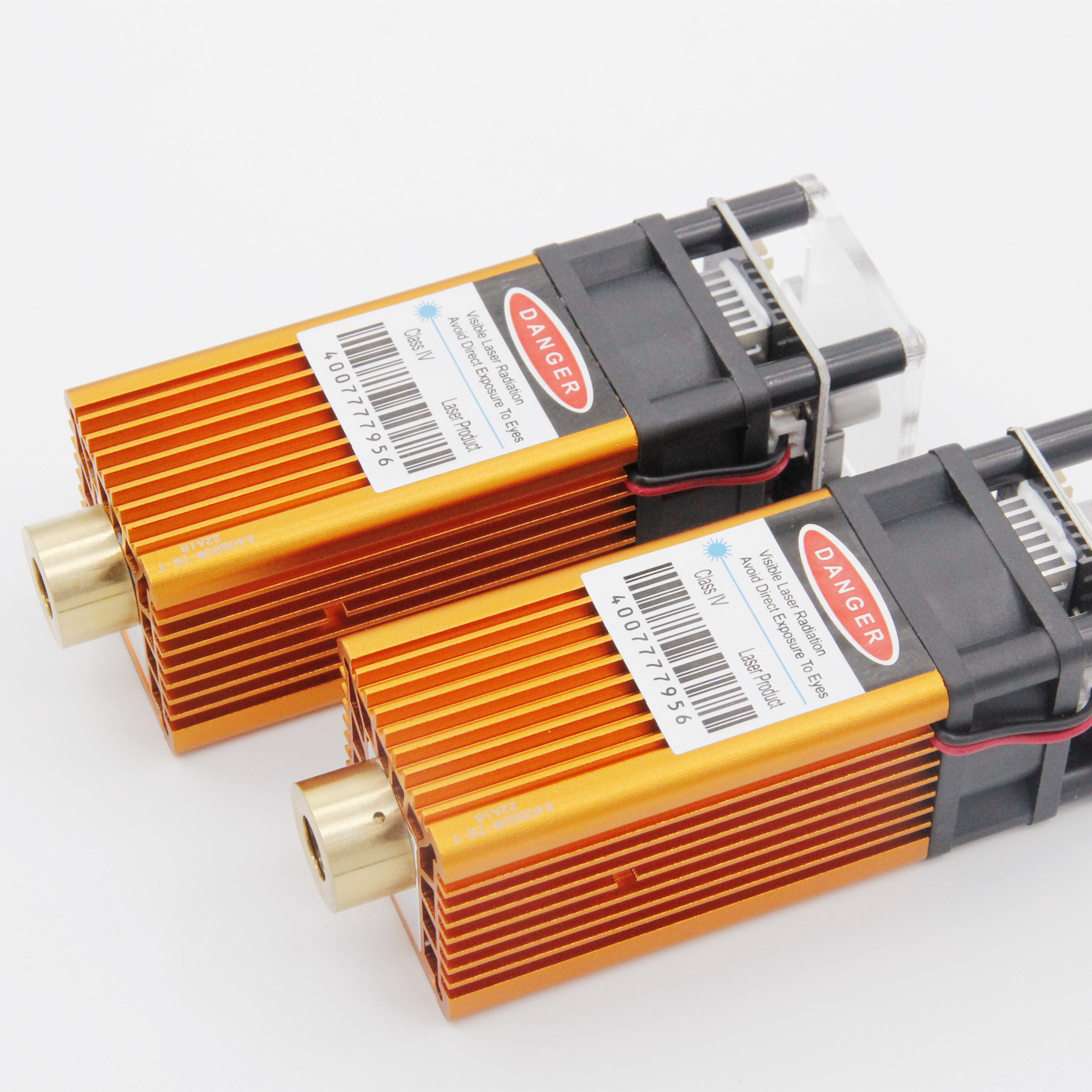
Laser modules, especially high-power ones, generate heat during operation. Managing this heat is crucial to keep the laser working efficiently and to extend its lifetime. Without proper cooling, the laser diode can overheat, causing unstable output power, wavelength shifts, or even permanent damage.
High-power laser modules produce significant heat because of the electrical current running through the diode. This heat raises the temperature of the laser diode's junction, where light is generated. When the junction temperature rises:
The output power can drop.
The laser wavelength may drift.
The risk of damaging the diode increases.
The lifetime of the laser shortens.
To prevent these issues, laser modules often have a metallic housing designed to conduct heat away from the diode. This housing can be mounted on external heat sinks, which increase surface area and improve heat dissipation.
Temperature stabilization ensures the laser diode operates at a steady temperature, minimizing wavelength drift and power fluctuations. Common techniques include:
Thermoelectric Coolers (TEC): Solid-state devices that pump heat away from the laser diode when powered.
Passive Cooling: Heat sinks and thermal pads conduct heat away without active components.
Temperature Sensors: Integrated sensors monitor the diode temperature.
Laser modules find their way into many industries due to their compact design, reliability, and precise output. Two major sectors where they shine are industrial and medical fields, plus their role in optical communications and data storage.
In industry, laser modules power tasks requiring accuracy and consistency:
Material Processing: Cutting, welding, and engraving use laser modules for clean, precise results on metals, plastics, and textiles.
Measurement and Alignment: They provide exact positioning in machine vision systems and alignment tools.
Printing and Imaging: Laser modules enable high-resolution printing and imaging, especially in barcode scanners and laser projectors.
Medical uses depend on the laser’s wavelength and power:
Photodynamic Therapy: Laser modules activate photosensitive drugs to target cancer cells.
Ophthalmology: They assist in eye surgeries, like correcting vision or treating retinal diseases.
Dermatology and Aesthetics: Laser modules remove tattoos, treat skin conditions, or perform hair removal.
Laser modules play a key role in transmitting and storing data:
Optical Communications: Fiber-coupled laser modules send light signals through fiber optic cables, enabling high-speed internet and telecommunication networks.
Data Storage: They read and write data in optical drives like Blu-ray and DVD players.
Laser modules bring many benefits over bare laser diodes, but they also have some limitations. Understanding these helps users and integrators get the best performance and lifetime from their modules.
Boresight error is the angular difference between the laser beam’s path and the module’s mechanical axis. It happens because the laser diode or its housing is slightly tilted inside the module. This means the beam might not point exactly where you expect, especially noticeable at longer distances.
Laser diodes are highly sensitive to electrostatic discharge (ESD). Static electricity can suddenly flow through the diode, damaging it permanently. To protect against this, many modules include grounded drive circuits.
Heat management plays a critical role in extending laser diode lifetime. Modules should be mounted on heat sinks with good thermal contact to dissipate heat effectively.
Laser modules simplify laser diode use, offering integrated optics, electronics, and cooling for enhanced performance. They are versatile, reliable, and suitable for various applications, including industrial, medical, and communications. Future trends in laser module technology include improved power stabilization, modulation capabilities, and advanced cooling techniques. Blueuniverse Laser provides innovative laser modules, ensuring high-quality, precise output for diverse needs. Their products deliver exceptional value by integrating cutting-edge features that meet evolving industry demands.
Q: What is a laser module?
A: A laser module is a compact device that integrates a laser diode with optics, electronics, and sometimes cooling systems, providing enhanced performance and protection for easy use.
Q: How do laser modules differ from standalone laser diodes?
A: Laser modules offer integrated components for ease of use and protection, while standalone diodes require external setups for operation, making modules more user-friendly.
Q: Why are laser modules used in industrial applications?
A: Laser modules are used in industrial applications for their precision, reliability, and ability to perform tasks like cutting, welding, and alignment effectively.
Q: What are the benefits of using a laser module?
A: Benefits include ease of use, built-in protection, stable output, and integrated optics for beam shaping, making them suitable for diverse applications.
Q: How can I troubleshoot a laser module?
A: Ensure proper heat sinking, check for electrostatic discharge protection, and use surge-protected power supplies to maintain stable operation and prevent damage


